

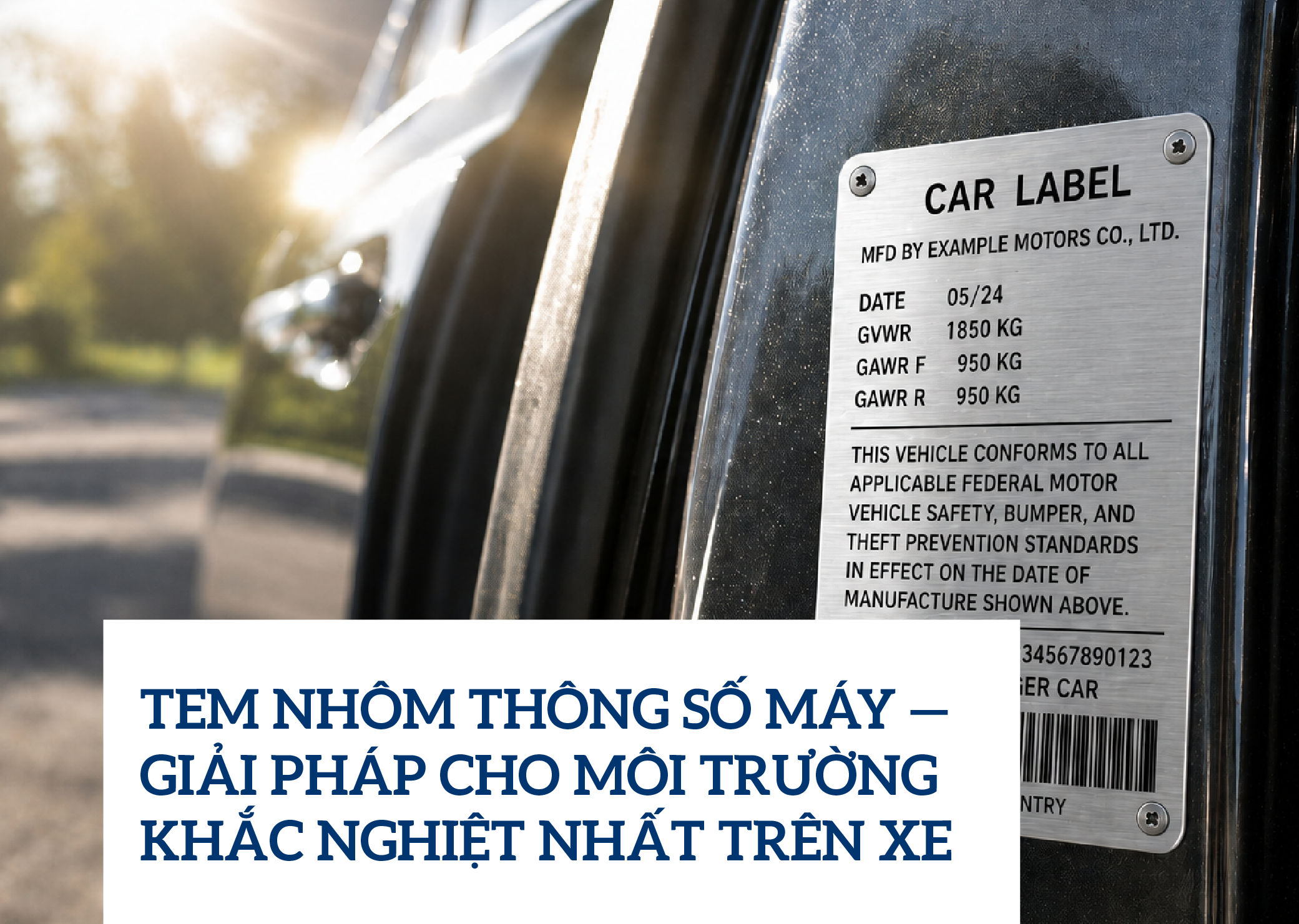
Inside the engine bay of every vehicle, there is a small metal plate bearing the vehicle’s complete technical specifications—chassis number (VIN), engine number, powertrain specifications, and emissions standards. To the vast majority of car owners, this is a detail they may never notice. But to automotive manufacturers, it is one of the most legally and technically vital components on the entire vehicle—mandatory data required for statutory vehicle inspections, warranty lookups, and, in many cases, official verification of vehicle provenance.
Inside the engine bay of every vehicle, there is a small metal plate bearing the vehicle’s complete technical specifications—chassis number (VIN), engine number, powertrain specifications, and emissions standards. To the vast majority of car owners, this is a detail they may never notice. But to automotive manufacturers, it is one of the most legally and technically vital components on the entire vehicle—mandatory data required for statutory vehicle inspections, warranty lookups, and, in many cases, official verification of vehicle provenance.
An engine spec plate that fades after a few years of use, or peels off due to constant exposure to grease and high temperatures in the engine compartment, is not merely an aesthetic defect. It is a technical failure that can force an entire vehicle lineup to be recalled just to re-apply the nameplates, incurring substantial operational expenses and significant reputational damage for the automaker.
Consequently, the requirement imposed on the label supplier extends far beyond merely imprinting the correct data upfront. The plate must remain completely intact and clearly legible throughout the vehicle’s actual operating lifespan—which can span ten years or more—within the most punishing environment on the automobile: continuous temperature cycling, direct contact with engine oil and cleaning chemicals, and relentless mechanical vibration.
This is precisely the challenge THACO has entrusted to MMLabel over the course of a 15-year partnership—one of the longest-standing relationships MMLabel maintains in the automotive OEM sector. The technical aluminum engine plates are manufactured on anodized aluminum, a surface treatment process that enhances corrosion resistance and creates an exceptionally stable substrate for printing inks to bond securely over extended periods.
Throughout those 15 years, THACO's technical standards never remained static. Each newly launched vehicle model brought its own parameters, part codes, and occasionally unique engineering tolerances. This demanded a manufacturing process flexible enough to pivot rapidly while preserving absolute precision—because even the slightest discrepancy in a printed technical parameter could lead to regulatory roadblocks during registration inspections or subsequent warranty processing.
With Mitsubishi, the challenge was somewhat different yet equally exacting: flawless synchronization across multiple model lines. When an automaker operates several vehicle models in parallel—each featuring distinct engine configurations and specifications—the requirement is that every single nameplate matches the factory-build configuration with absolute accuracy, leaving zero margin for cross-model mix-ups within the same production run.
At the same time, the durability of the nameplate must cover the true operational lifecycle of the vehicle, not just the warranty period written on paper. This marks the defining distinction between a conventional label printer and a true automotive OEM partner: the product cannot merely pass inspection at factory rollout; it must continue to meet standards after years of real-world road use.
The real differentiator is not simply producing a single technically compliant nameplate—that is a prerequisite, not the crowning achievement. The true core value lies in consistently maintaining that level of precision and durability at an industrial scale of hundreds of thousands of units each year, across multiple vehicle generations, without a single batch suffering from spec discrepancies or degraded material performance.
This is what an automotive OEM partner values above all else from a labeling supplier: not novelty, but absolute, uncompromising reliability—replicated hundreds of thousands of times without exception. For MMLabel, this is the proven foundation forged over 15 years alongside THACO and reinforced through its partnership with Mitsubishi: concrete proof of true, industrial-scale manufacturing capability delivered in practice, not just in theory.


|







.png)
.png)
.png)
.png)
.png)
.png)
.png)