

A batch of labels dispatched this month turns out slightly darker in blue than the batch delivered last month. To the end consumer, the difference is practically invisible. But to a showroom merchandiser arranging products side by side every day, or to the quality control department of a brand managing hundreds of retail outlets nationwide, that subtle variance raises a critical question requiring formal explanation: Why are two batches of the exact same SKU not perfectly identical?
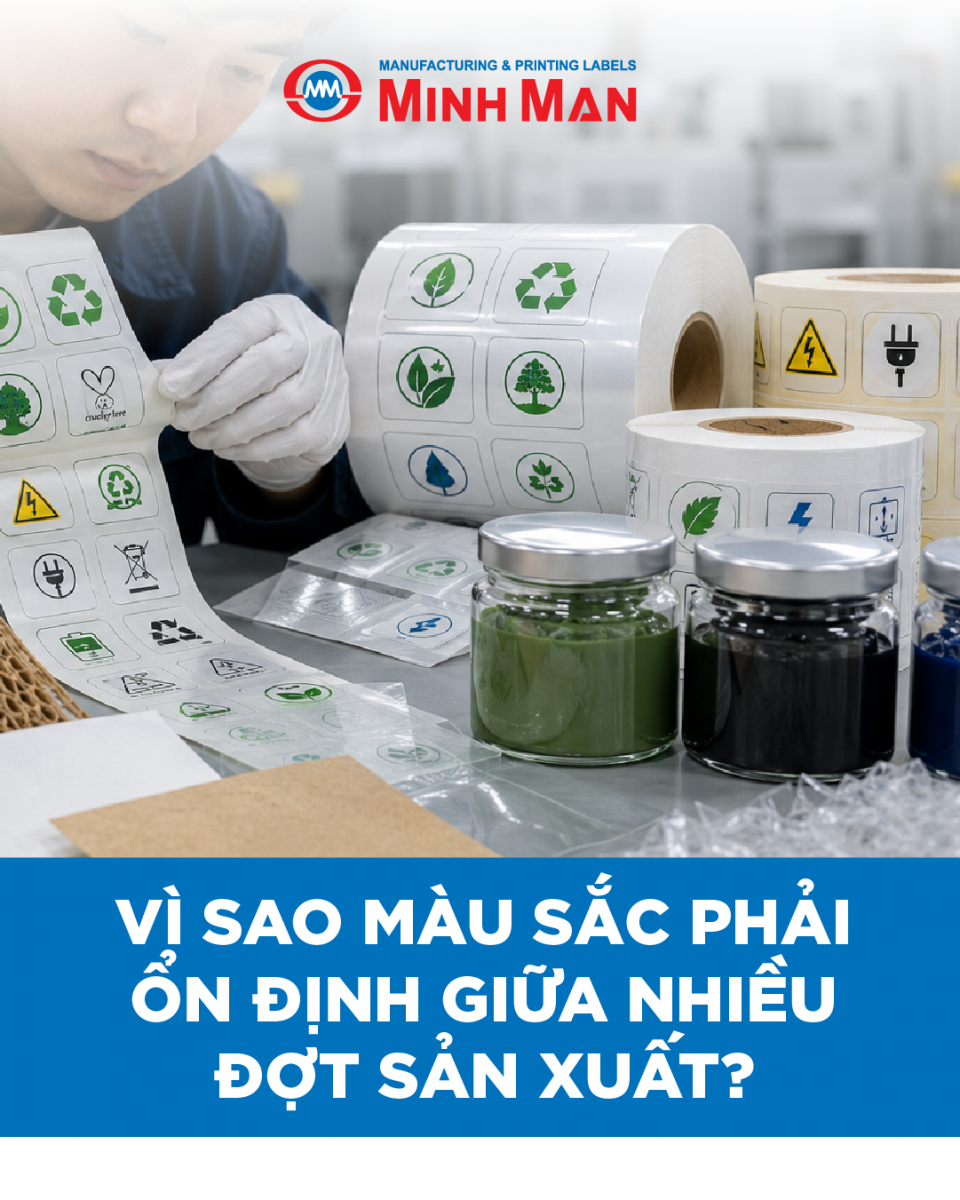
A batch of labels dispatched this month turns out slightly darker in blue than the batch delivered last month. To the end consumer, the difference is practically invisible. But to a showroom merchandiser arranging products side by side every day, or to the quality control department of a brand managing hundreds of retail outlets nationwide, that subtle variance raises a critical question requiring formal explanation: Why are two batches of the exact same SKU not perfectly identical?
.png)
Contrary to common belief, color shifts between production runs rarely stem from a single root cause. In the daily operation of an industrial print facility, at least four variables interact simultaneously:
Ink batch variances: Inks sourced across different procurement cycles can vary in tone and density by several percentage points, even under identical color codes.
Environmental fluctuations: Seasonal shifts in workshop temperature and relative humidity directly impact ink adhesion, transfer rates, and drying times on substrates.
Lack of press calibration: Printing presses that are not systematically recalibrated before each new print run accumulate slight machine tolerances that compound over time.
Missing physical reference standards: Without a rigorous archiving system for master samples, press operators lack a concrete baseline when fulfilling reorders placed months apart.
For facilities that do not strictly manage the Pantone Matching System (PMS) and lack physical retain samples, a 5% to 10% color drift between runs is almost inevitable. That threshold happens to be the precise range at which an observant eye can readily detect a difference—especially under the uniform, high-intensity lighting of retail showrooms and product displays.
.png)
On a standalone product, a slight color mismatch on a label may seem negligible. But for an enterprise brand running a structured distribution network—spanning hundreds of dealerships, thousands of retail touchpoints, or an assembly line operating continuously over years—color consistency forms an integral part of brand integrity and customer trust. Clients expect their corporate identity, logos, and safety warning markers to remain uniform regardless of when or where an item was manufactured.
When that consistency breaks down, the repercussions rarely stop at a mild customer complaint. In many cases, a client’s incoming quality control (IQC) team will quarantine the entire shipment for verification. This triggers warehousing fees, disrupts delivery schedules, and, in worst-case scenarios, leads to mandatory full-batch reprints—costly losses in time and capital that could have been avoided through disciplined upfront process control.
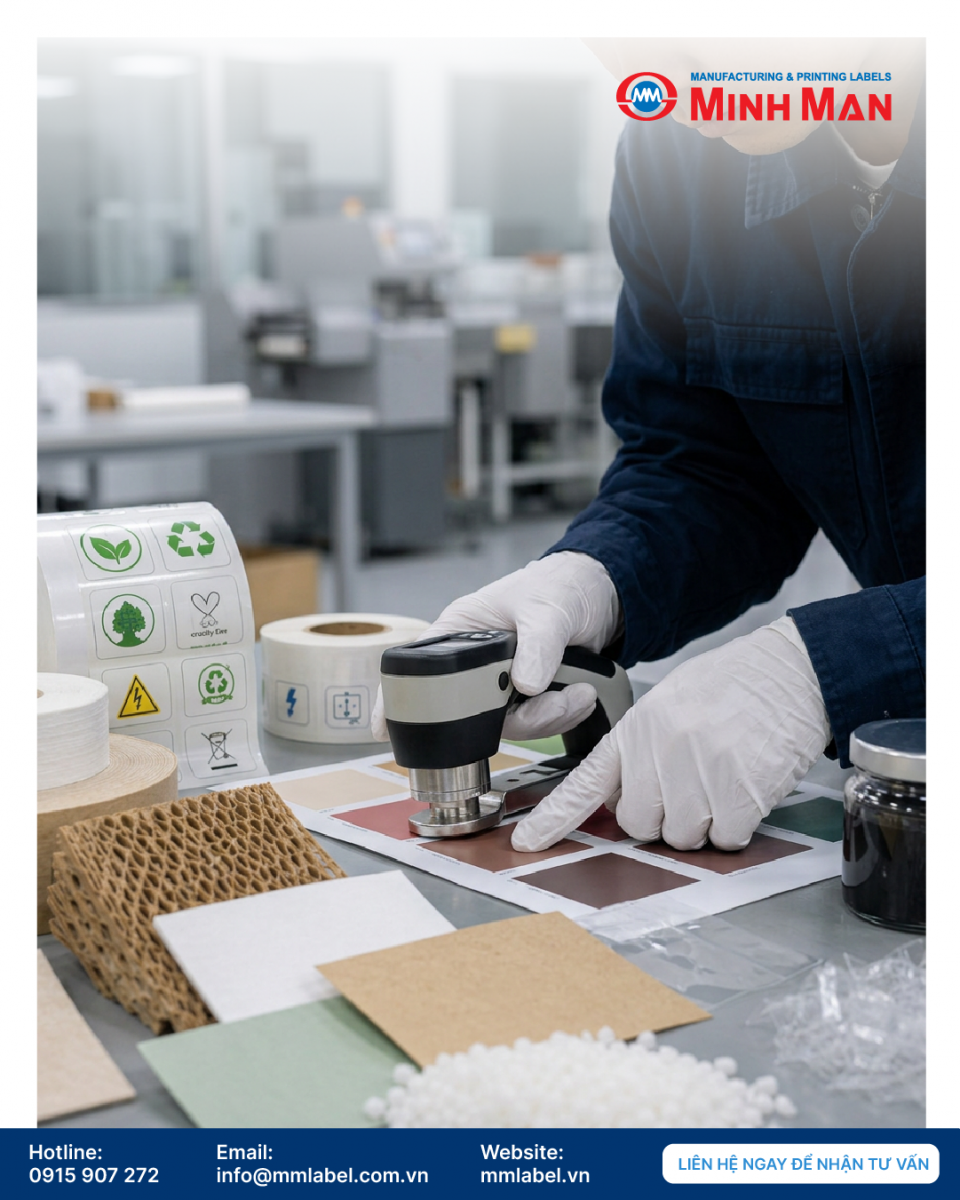
Maintaining color stability across production runs spanning several years requires an integrated system rather than an isolated checkpoint:
Standardized Color Profiles: Each client's Pantone formulas and digital color profiles must be securely archived and cross-referenced on every run, even for orders placed months apart.
Hardware Calibration: Printing equipment should be routinely calibrated using spectrophotometers before every new run, eliminating reliance on operator guesswork or visual estimates.
Physical Master Samples: Approved initial production samples ("golden samples") must be physically preserved as benchmark references, enabling future lots to be matched directly rather than relying solely on digital files or spec sheets.
Beyond procedural controls, substrate selection plays a pivotal role in color fidelity. This is a primary driver behind large-scale label manufacturers in Vietnam shifting from PVC to PP (polypropylene) film. Aside from environmental concerns surrounding PVC's poor recyclability, PP provides surface characteristics that facilitate more uniform, consistent ink wet-out and adhesion across runs, effectively mitigating substrate-induced color drift.
For brands operating expansive dealer networks or multi-location showrooms, selecting a label partner goes far beyond asking, "Can you print this color?" The decisive question is, "Can you hold this exact color steady across hundreds of production runs over many years?"
This capability requires synchronized investment across standardized operating procedures, advanced calibration instrumentation, and premium substrates—a standard that MMLabel has established and maintained throughout its partnerships with leading OEM and consumer appliance manufacturers in Vietnam.


|







.png)
.png)
.png)

.png)
.png)
.png)
.png)