
When "Looking Good" Does Not Mean "Durable"
There is a common mistake many businesses make when ordering outdoor labels: evaluating quality solely by visual inspection upon delivery. A brand-new label always looks sharp, color-accurate, and beautifully glossy—but that is not the real test. The true test comes six months, a year, or three years later, after the label has endured hundreds of hours of intense sunlight, dozens of rainstorms, and countless day-to-night temperature fluctuations.
For businesses that utilize outdoor logos, load capacity labels, or long-term brand identification tags—especially in the automotive, transportation, and industrial equipment sectors—choosing the wrong material from the start is not just an aesthetic issue. It results in hidden costs: the cost of periodic replacement, the cost of operational downtime while waiting for reprints, and an invisible but far more severe cost—the damage to your brand's image in the eyes of customers and partners.
There is a common mistake many businesses make when ordering outdoor labels: evaluating quality solely by visual inspection upon delivery. A brand-new label always looks sharp, color-accurate, and beautifully glossy—but that is not the real test. The true test comes six months, a year, or three years later, after the label has endured hundreds of hours of intense sunlight, dozens of rainstorms, and countless day-to-night temperature fluctuations.
For businesses that utilize outdoor logos, load capacity labels, or long-term brand identification tags—especially in the automotive, transportation, and industrial equipment sectors—choosing the wrong material from the start is not just an aesthetic issue. It results in hidden costs: the cost of periodic replacement, the cost of operational downtime while waiting for reprints, and an invisible but far more severe cost—the damage to your brand's image in the eyes of customers and partners.
Most buyers assume that a label's quality relies entirely on the ink. In reality, ink is only a small part of the overall picture. The following three factors truly determine whether a label will "survive" outdoors:
Substrate (Base Material): This is the foundation that dictates the label's basic resistance to UV rays, temperature, and humidity. A material lacking UV resistance will begin to break down at the molecular level under sunlight, leading to brittleness, cracking, and fading after just a few months of continuous outdoor exposure.
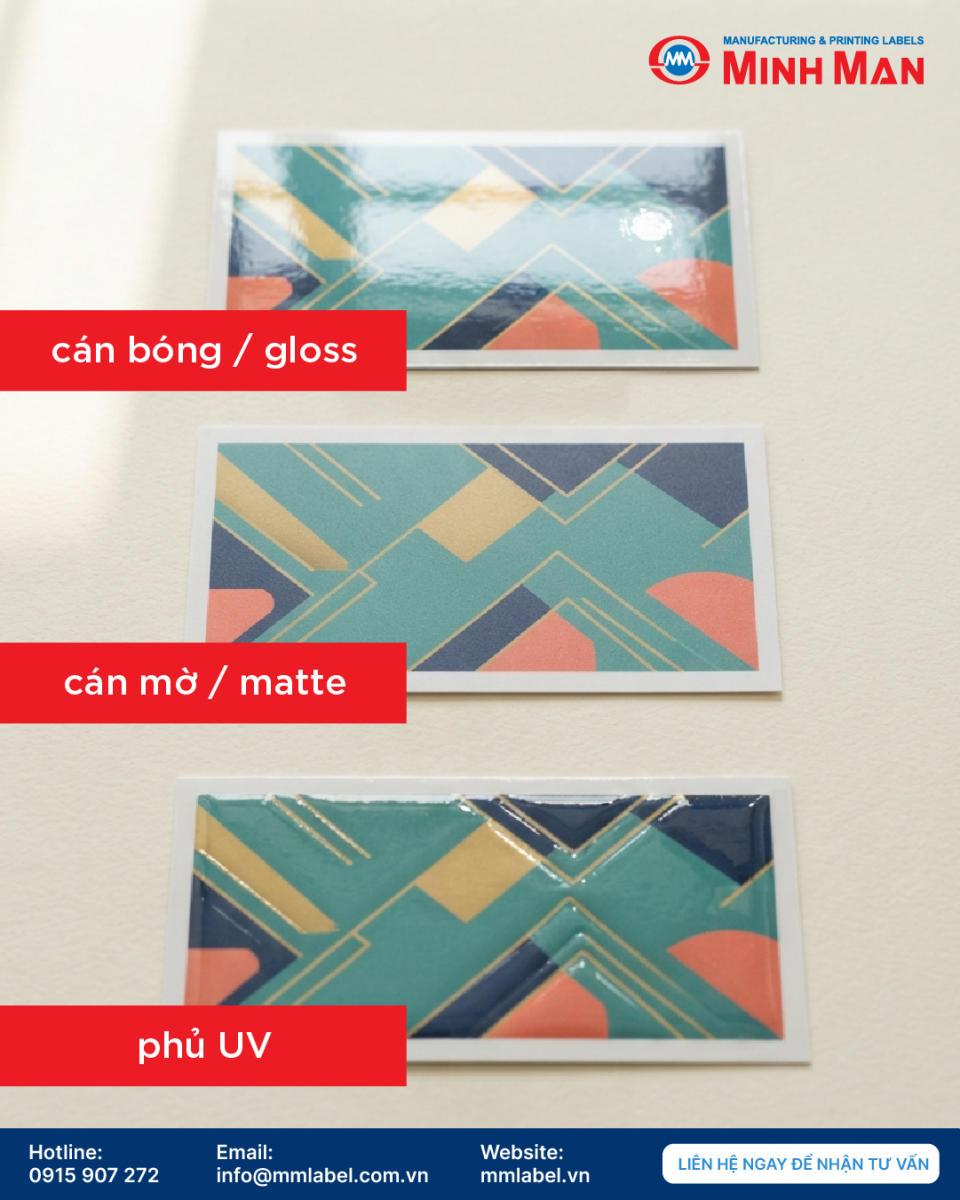
Protective Coating (Finish): Even with a high-quality substrate, a label without a specialized lamination or UV coating will degrade rapidly. Without this protective "armor," the printed surface is exposed directly to the harsh environment, leaving the ink vulnerable.
Adhesive: This is the most frequently overlooked factor, yet it is a common reason labels fail long before their colors fade. An adhesive that is incompatible with the application surface (metal, plastic, or painted surfaces) or unable to withstand thermal expansion and contraction will cause the label's edges to peel—a classic sign that the wrong adhesive was chosen from the start.
The market currently offers multiple material options for outdoor labels, each suited to different requirements and budgets.
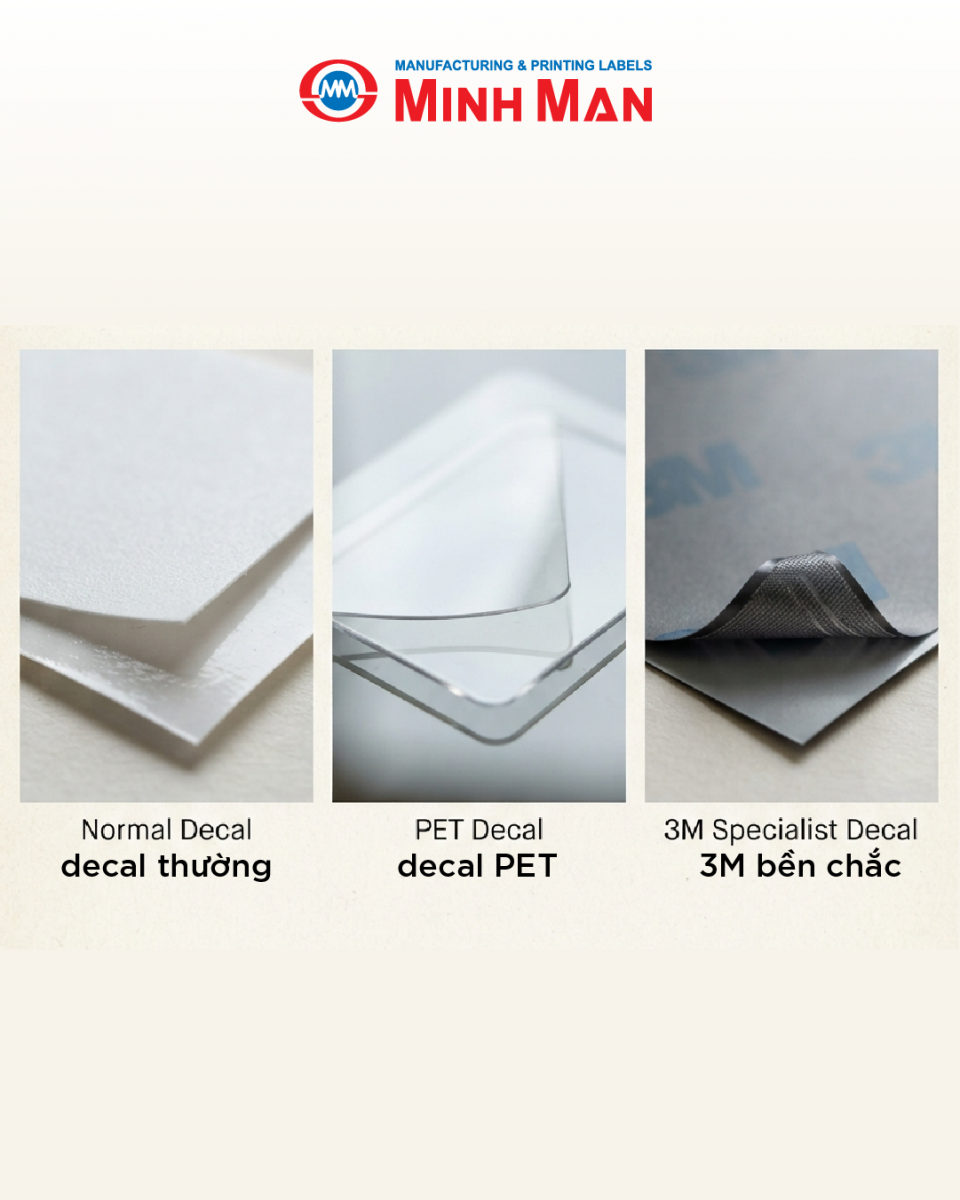
Standard PVC Decals are the most popular choice in terms of price, but they also have the shortest outdoor lifespan—typically showing signs of fading and peeling after just 6 to 12 months. Beyond durability, PVC has another rarely mentioned drawback: poor biodegradability. Consequently, large, eco-conscious enterprises are increasingly restricting its use.
This is why MMLabel has chosen PP (Polypropylene) decals as the standard material over PVC for our decal product lines. PP decals not only offer better mechanical strength and weather resistance than PVC at a similar price point, but they also align with the sustainable material trends increasingly prioritized by major enterprises, especially FDI (Foreign Direct Investment) partners and multinational corporations.
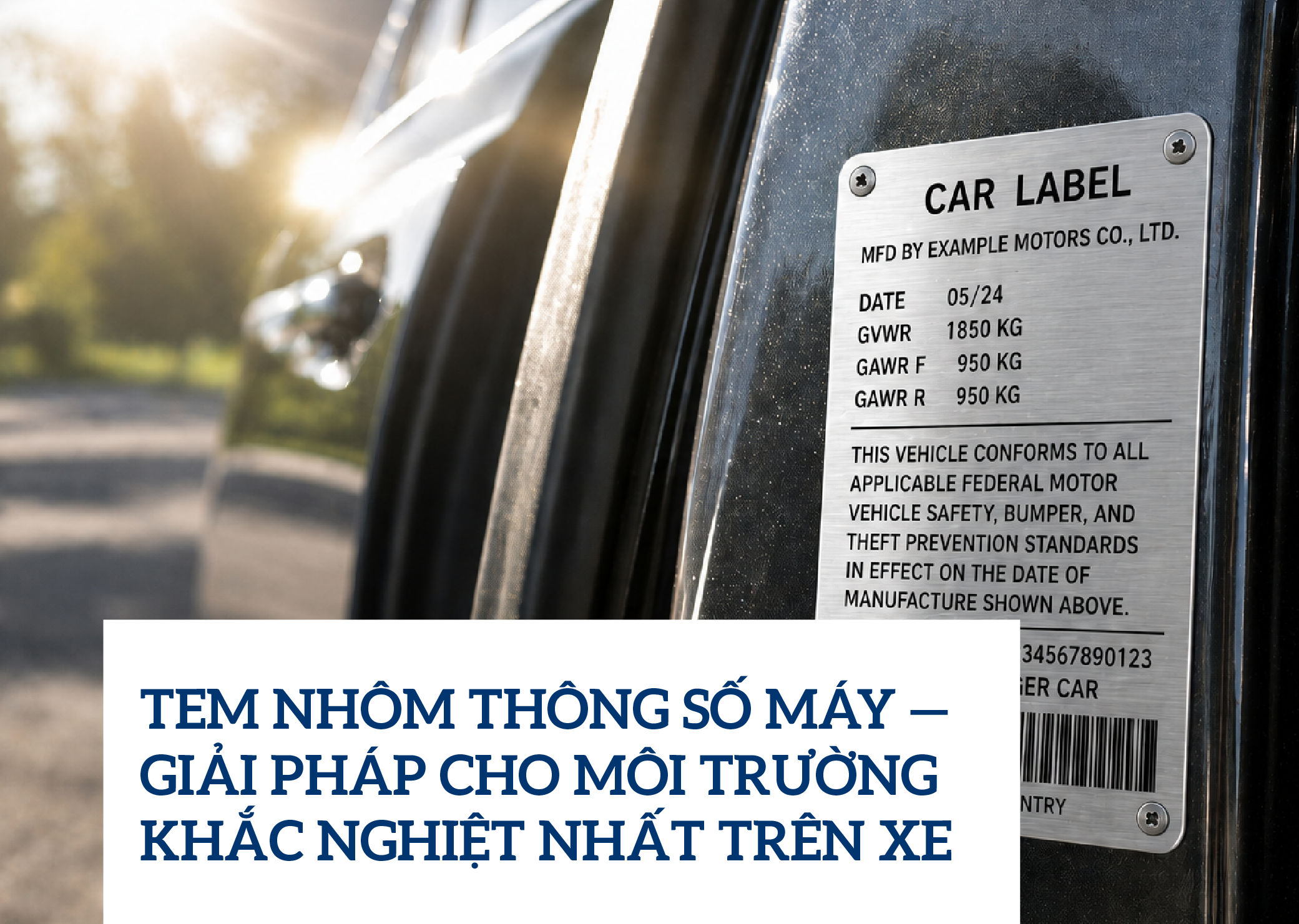
For medium-term durability applications—such as technical specification tags and safety warnings that must withstand harsh operating conditions for 2 to 3 years—PET (Polyester) is the logical choice. It boasts high mechanical strength and superior chemical and heat resistance compared to standard decals.
For applications demanding the longest long-term durability—such as dealership logos, vehicle decals, and outdoor signage that must maintain color stability for 5 to 7 years or more—specialized 3M materials are the ultimate answer. These materials are internationally certified for long-term outdoor lifespans, retaining color stability under continuous UV exposure to a degree that few other materials can achieve.
The second most common mistake, after focusing solely on price, is searching for a universal "best" material for all needs. In reality, the right question isn't "Which material is best?" but rather "Which material is right for my specific operating environment?"
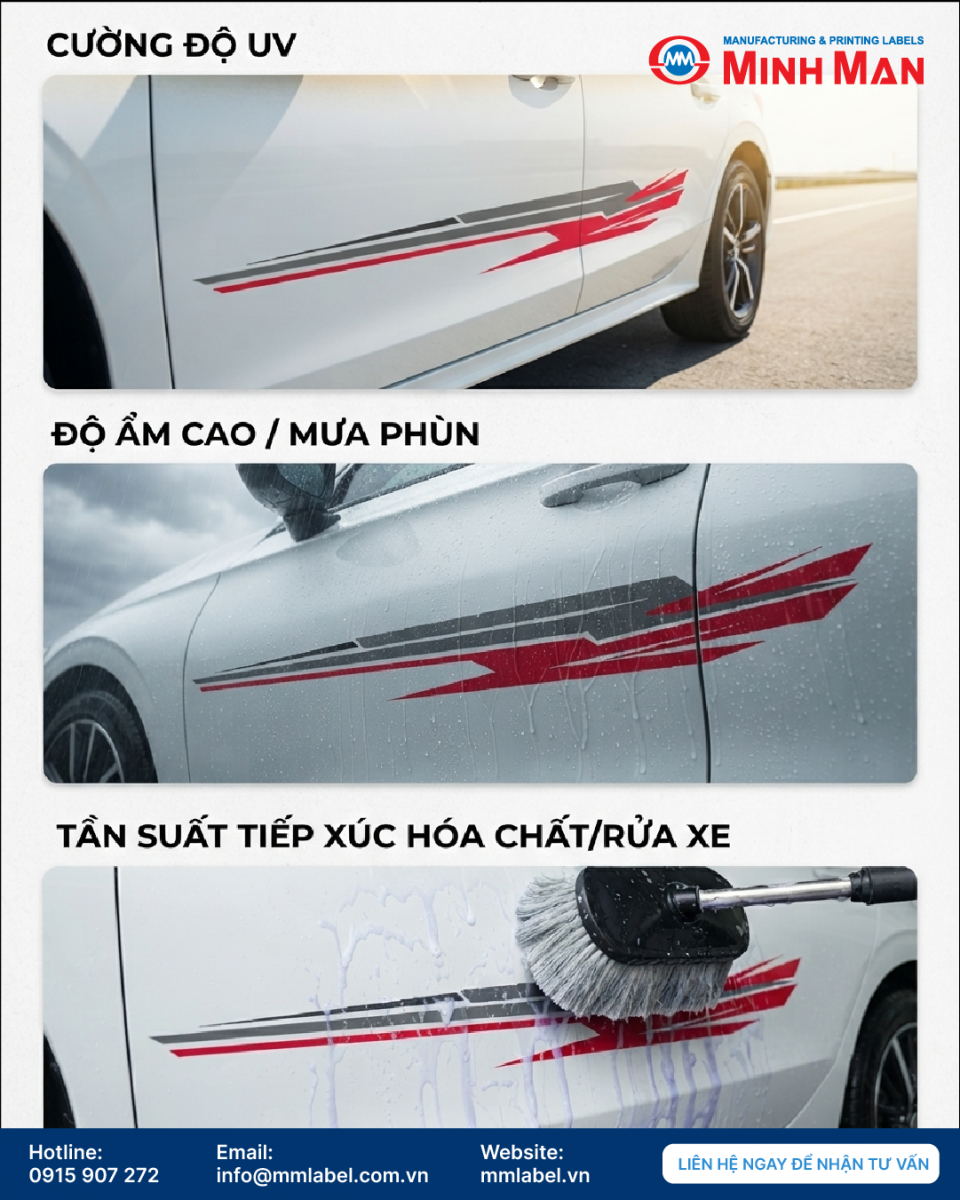
A logo label on a showroom sign, exposed directly and continuously to sunlight, has entirely different requirements than a safety warning label placed under the hood of a machine, where the deciding factor is heat and grease resistance rather than UV resistance. Properly evaluating the usage conditions—sun intensity, frequency of chemical exposure, application surface, and the required lifespan of the label's appearance—must be done before selecting the material, not after the order has been produced.
This is the true value an experienced label manufacturer brings to the table—not just printing the requested design accurately, but advising on the correct material based on each client's actual usage conditions.
At MMLabel, our consulting process always begins with understanding the specific operating environment—installation location, weather exposure frequency, and lifespan requirements—before proposing a material solution, whether that is standard PP decals, PET for medium-term applications, or 3M materials for maximum long-term fade resistance. This approach not only helps clients avoid the hidden costs of replacing labels but also ensures that their brand image is upheld exactly as intended, throughout the entire lifecycle of their product.


|







.png)
.png)
.png)
.png)
.png)
.png)
.png)