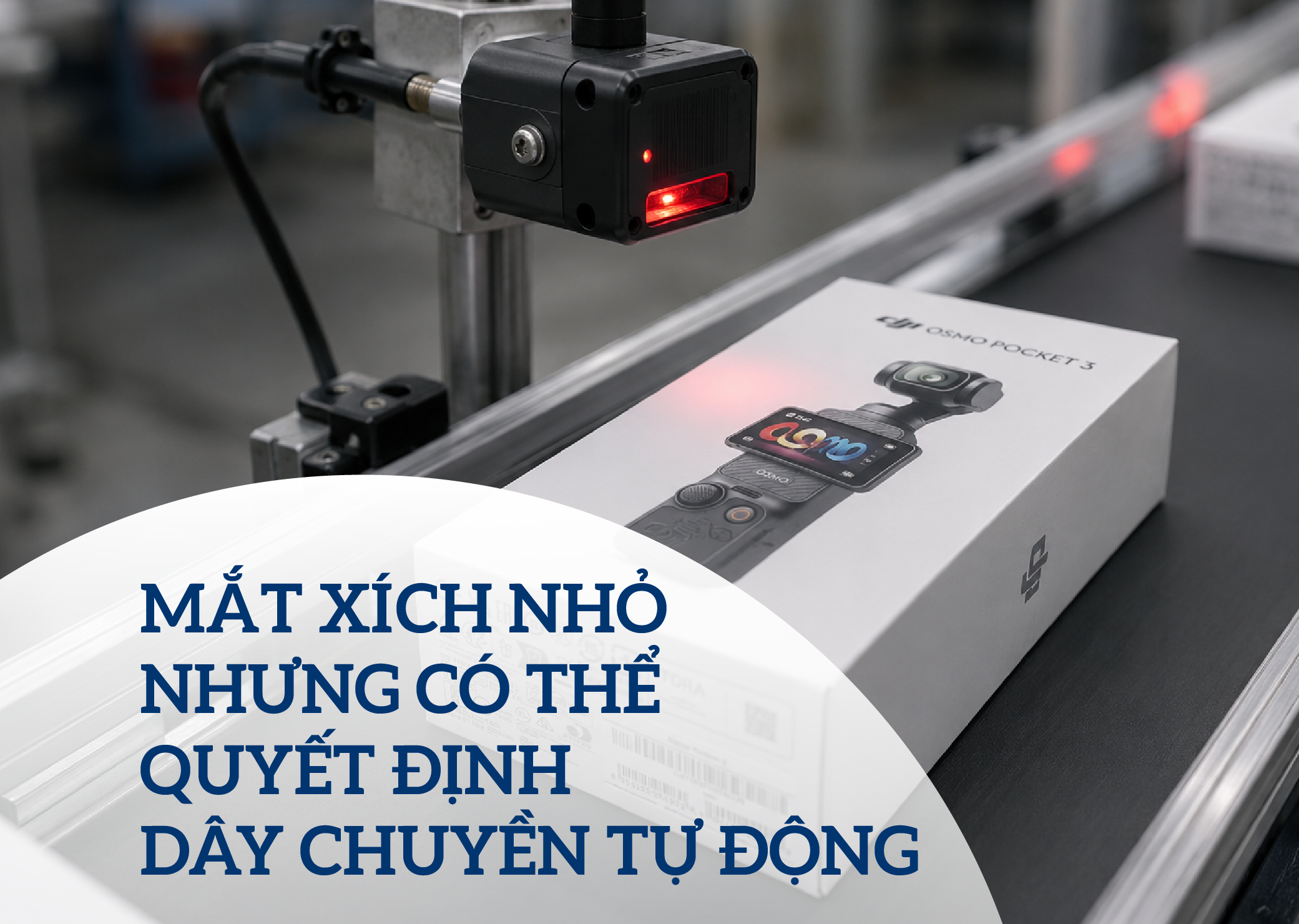

How can every single label in a mass-production run carry a completely unique code—without stopping the press to swap plates midway? This is a question being asked by an increasing number of manufacturers in Vietnam, as the demand for item-level traceability, individualized warranty tracking, and anti-counterfeiting measures becomes more urgent than ever.
How can every single label in a mass-production run carry a completely unique code—without stopping the press to swap plates midway? This is a question being asked by an increasing number of manufacturers in Vietnam, as the demand for item-level traceability, individualized warranty tracking, and anti-counterfeiting measures becomes more urgent than ever.
.png)
With static-plate printing—the conventional method for high-volume label manufacturing—every label in a production run shares identical content. While this is optimal when mass-producing a single uniform design, it becomes a severe bottleneck when individual product units require unique serialized data.
In such cases, the traditional workaround has been to print numbers separately, apply stickers manually, or process labels through a secondary offline stage after initial finishing. This approach not only consumes extra labor and cycle time, but also introduces the greatest operational risk in the entire process: a mismatch between the physical code on the label and the records in the management database. A single misplaced or misapplied label can disrupt the entire downstream traceability chain.
.png)
Variable Data Printing (VDP) enables each label within a single, continuous print run to carry distinct information—such as sequential serial numbers, dynamic QR codes linked to online lookup portals, or unique warranty keys—without halting the press or changing tooling between units. The data assignment takes place directly during the print pass, completely eliminating secondary encoding steps and the human errors associated with them.
In essence, this is the difference between printing one thousand identical duplicates of a single artwork versus printing one thousand distinct variations of that design—where each unit receives an individual digital identity while being produced at mass-production speeds and economical unit costs.
.png)
End-to-End Product Traceability: The most prominent application is product serialization—where every unit receives a unique identifier to enable tracking throughout the supply chain, from the factory floor to the end consumer. In the automotive component sector, this allows a specific part to be traced back to its precise production batch, dispatch date, and the exact assembly line on which it was manufactured.
Item-Level Warranty Management: Moving beyond broad, batch-based warranty policies. When every consumer appliance or industrial component bears an individual code, manufacturers can instantly verify warranty activation timestamps, service histories, and maintenance records with a single scan.
Anti-Counterfeiting and Brand Protection: Perhaps the most urgent application in today's market. When each security code is unique and holds single-use verification validity—meaning that once authenticated, it cannot be reused or cloned—counterfeiting products becomes significantly more difficult compared to traditional static warranty seals.
The true value of Variable Data Printing does not lie solely in print hardware; it depends entirely on whether the physical code on each label synchronizes with absolute precision to the backend data infrastructure. A well-executed VDP deployment must be paired with a reliable database and verification platform—because even a minor discrepancy between the physical serialization and system records can invalidate the entire traceability or security system.
For enterprises evaluating product-level traceability or anti-counterfeiting strategies—particularly in high-compliance sectors like automotive, consumer electronics, and pharmaceuticals—VDP is a critical technology to explore thoroughly, not just from a printing standpoint, but as a holistic systems-integration initiative.


|







.png)
.png)
.png)

.png)
.png)
.png)
.png)