
.png)
When a manufacturing enterprise begins searching for a label supplier, the first question is almost invariably about price. However, for organizations that have endured late deliveries due to a supplier failing to keep pace with schedules, or experienced shipment rejections caused by technical deviations, priorities shift rapidly in subsequent selections—moving swiftly from price to reliability.

This was a wonderful opportunity for us to share the story of MMLabels: how our journey began, the core values we pursue, and what gives each of our products its own unique identity.
One of our greatest passions is the localization of label manufacturing. We firmly believe that labels made in Vietnam can be crafted right here at home—from design and materials to final production—with quality fully on par with imported alternatives. Having a proactive domestic supply chain empowers businesses to cut lead times, optimize costs, and stay flexible with every order. It is also our humble contribution toward elevating Vietnamese brands on the market.
.png)
How can every single label in a mass-production run carry a completely unique code—without stopping the press to swap plates midway? This is a question being asked by an increasing number of manufacturers in Vietnam, as the demand for item-level traceability, individualized warranty tracking, and anti-counterfeiting measures becomes more urgent than ever.
.png)
Inside the engine bay of every vehicle, there is a small metal plate bearing the vehicle’s complete technical specifications—chassis number (VIN), engine number, powertrain specifications, and emissions standards. To the vast majority of car owners, this is a detail they may never notice. But to automotive manufacturers, it is one of the most legally and technically vital components on the entire vehicle—mandatory data required for statutory vehicle inspections, warranty lookups, and, in many cases, official verification of vehicle provenance.
.png)
A batch of labels dispatched this month turns out slightly darker in blue than the batch delivered last month. To the end consumer, the difference is practically invisible. But to a showroom merchandiser arranging products side by side every day, or to the quality control department of a brand managing hundreds of retail outlets nationwide, that subtle variance raises a critical question requiring formal explanation: Why are two batches of the exact same SKU not perfectly identical?
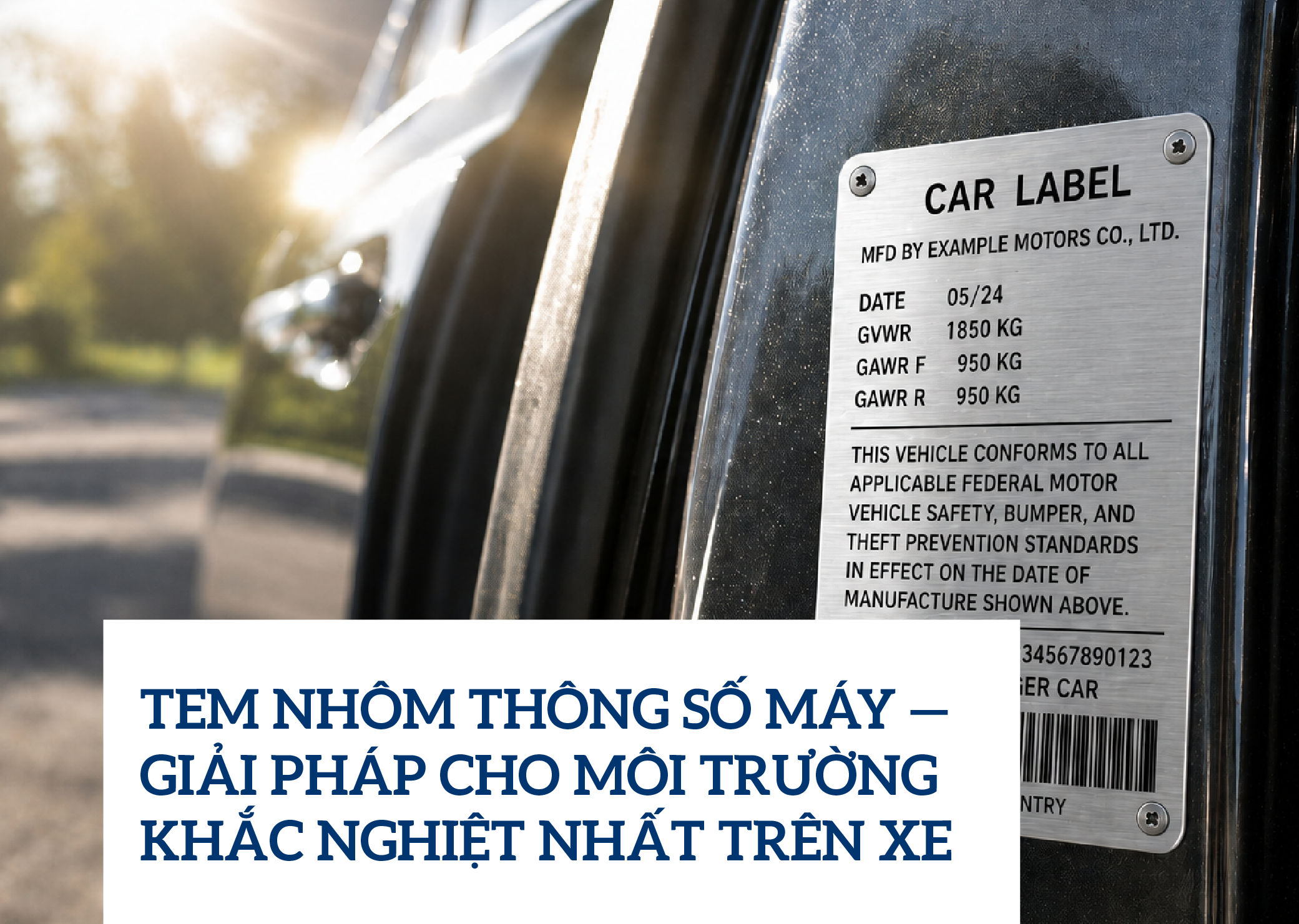
Under the hood of virtually every vehicle, there is a small, seldom-noticed plate—bearing the chassis number (VIN), engine code, and vital technical parameters. Most of the time, no one pays it any mind. But when the need arises—during statutory vehicle inspections, when cross-referencing OEM replacement parts, processing warranty claims, or verifying vehicle provenance—this unassuming plate suddenly becomes the most critical detail on the vehicle.
The fundamental question is: when that decisive moment comes, will that plate still be clearly legible after 5, or even 10 years spent in the most punishing environment of an automobile?







.jpg)
.png)